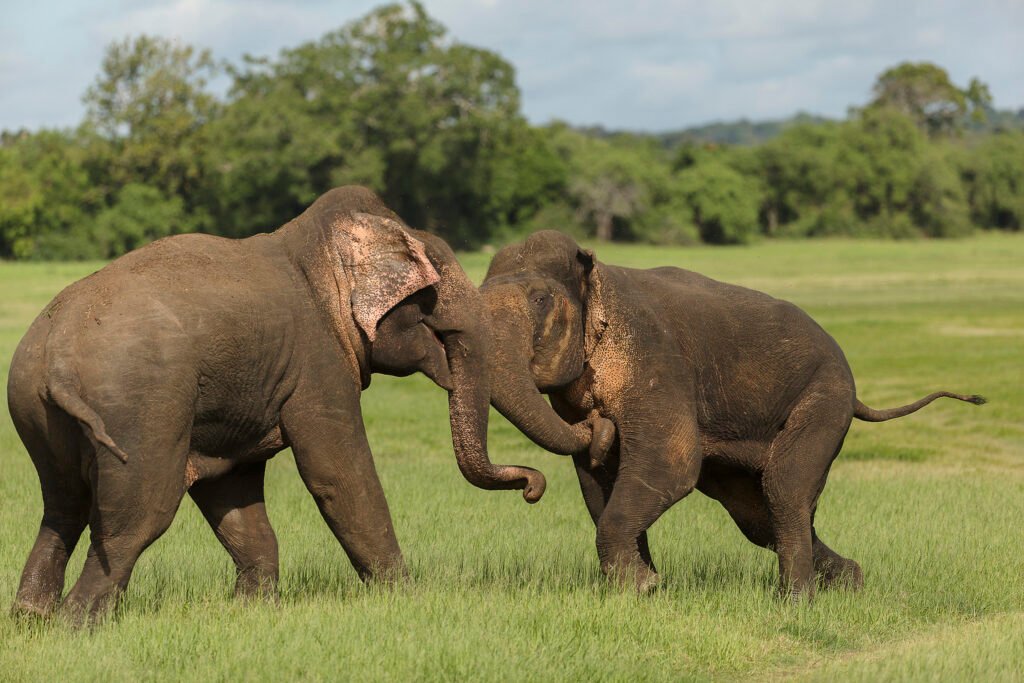
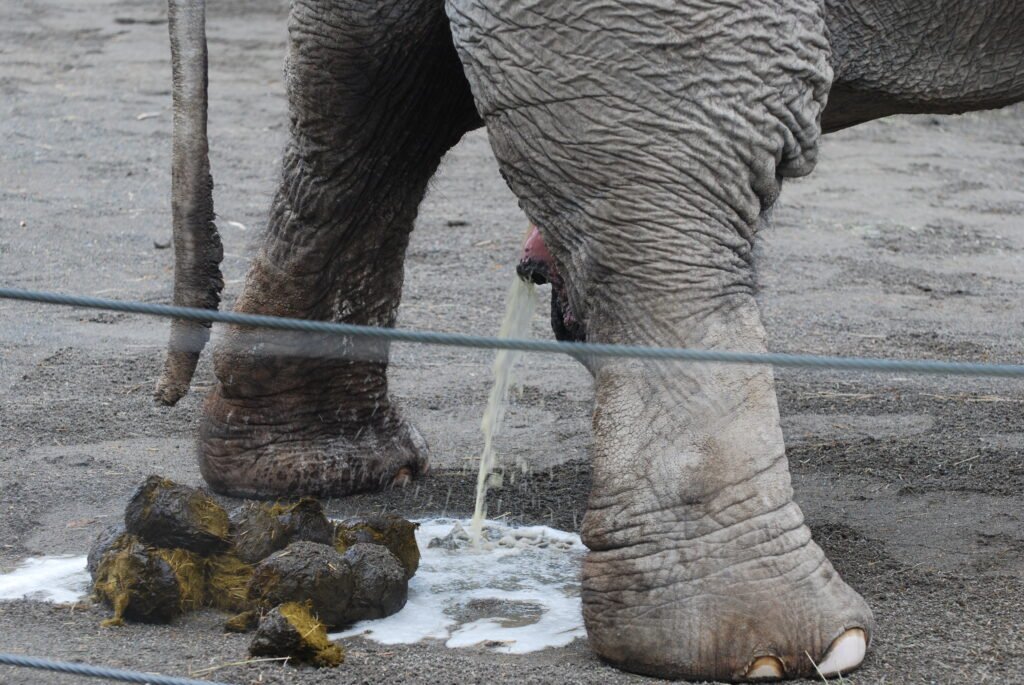
When elephants go through musth they secrete a substance called temporin from their temporal glands. Musth is a periodic condition that male elephants go through where they behave like an incontinent steroid juicer. They are horny and aggressive…but also constantly pee all over themselves.1there seems to be a link between sex and urine: humans and watersports, bull elephants in musth, and randy porcupines (“To court a female, a male porcupine will first spray urine on the female to get her interested”).
What is Temporin?
The first mention of “temporin,” according to the Googs, is in a Latin footnote in the 1884 French book,Introduction à la critique textuelle du Nouveau Testament. The footnote referenced the Patrologia Latina, collection of Christian writings.2The weird thing is that “temporin” is not a Latin word, the word does not appear in the digitized version of the P.L., and the larger phrase in which the word appears produces no good results in a Google search.
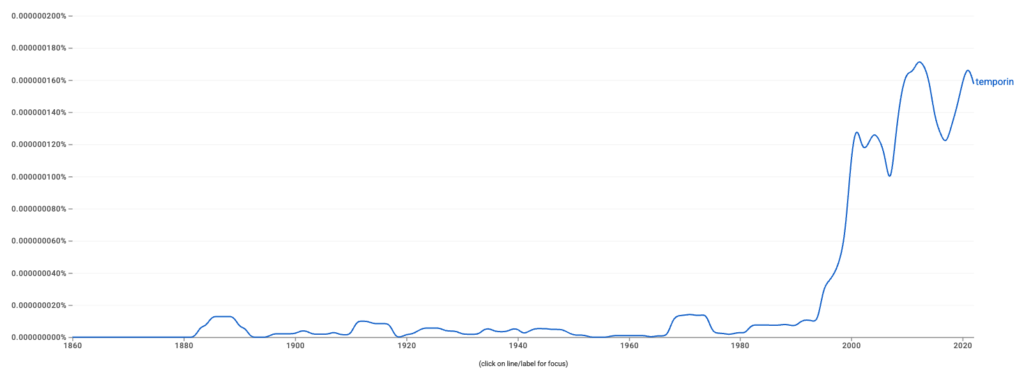
The strange thing is that temporins were discovered over a hundred years after the first mention of the word. It appears, according to a 1996 paper (the first paper to use the word), that temporins were so named because they were isolated from the skin of R. temporaria and other frog species. Temporins (in general) are basically a family of peptides, predominantly amino acids. Similar peptides were also found in wasp venom.3If you really, really care about temporin molecular structure, read this. Interestingly, temporins often have antibacterial qualities. It is unclear whether the authors of the 1996 paper coined the term because they use the passive voice (“[t]hese peptides, which were named temporins….”). I assume it was the 1996 authors because a date-restricted search of Google Scholar does not return anything for temporins until 1996 when the paper was published.4This still doesn’t answer what the hell all those previous mentions of “temporin” in the Ngram search came from but at this point I have stopped caring. One paper says that Sykes (1971) created the term, but a literature search does not bear this out.
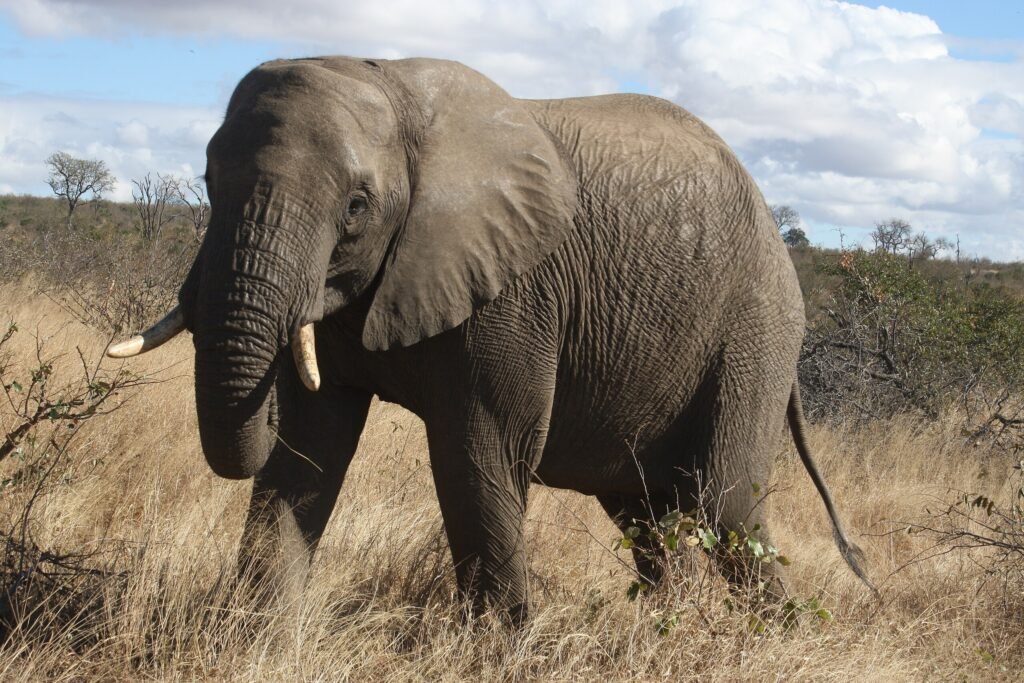
Dario Crespi – Own work, CC BY-SA 4.0
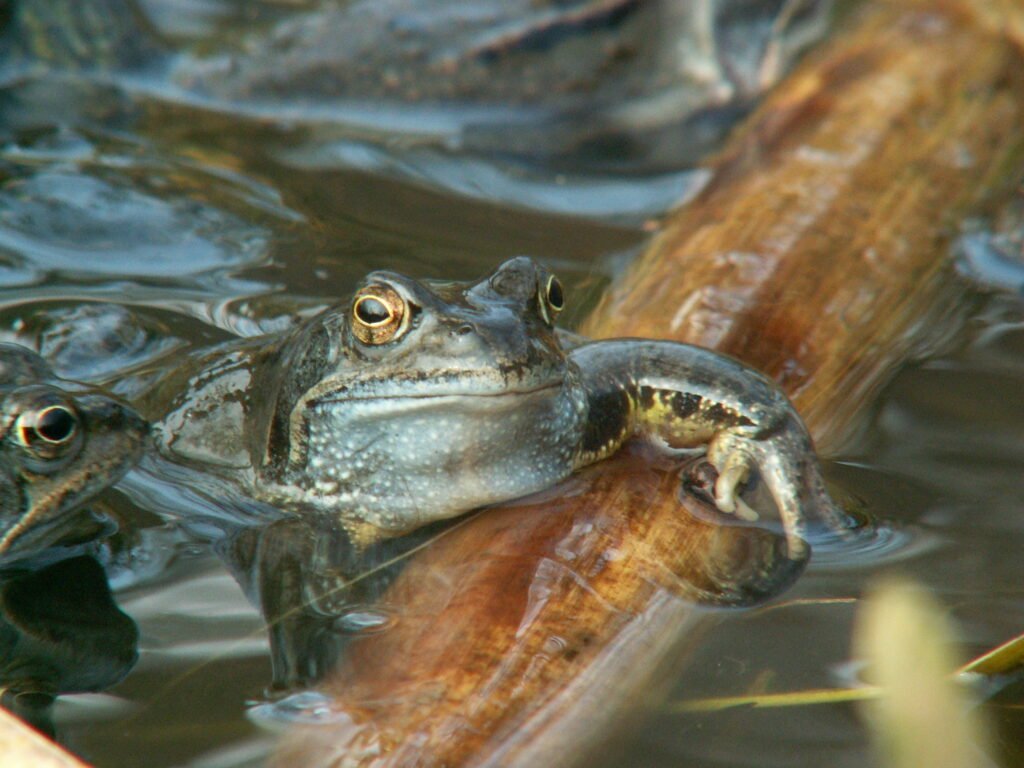
Piet Spaans Viridiflavus, CC BY-SA 2.5
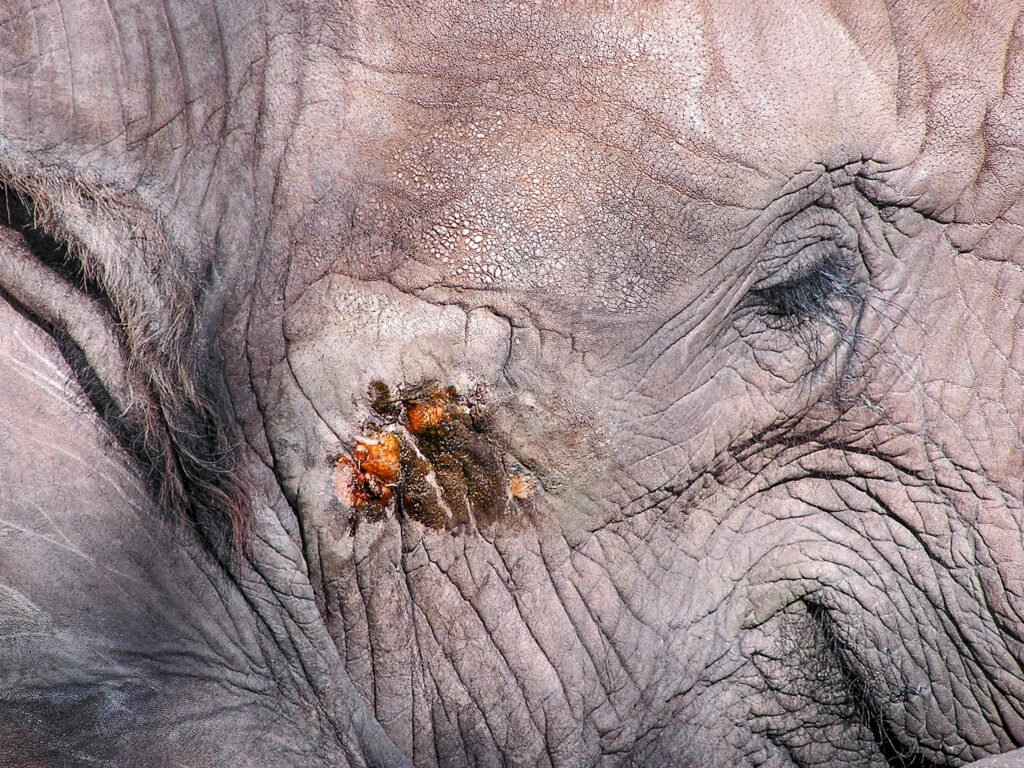
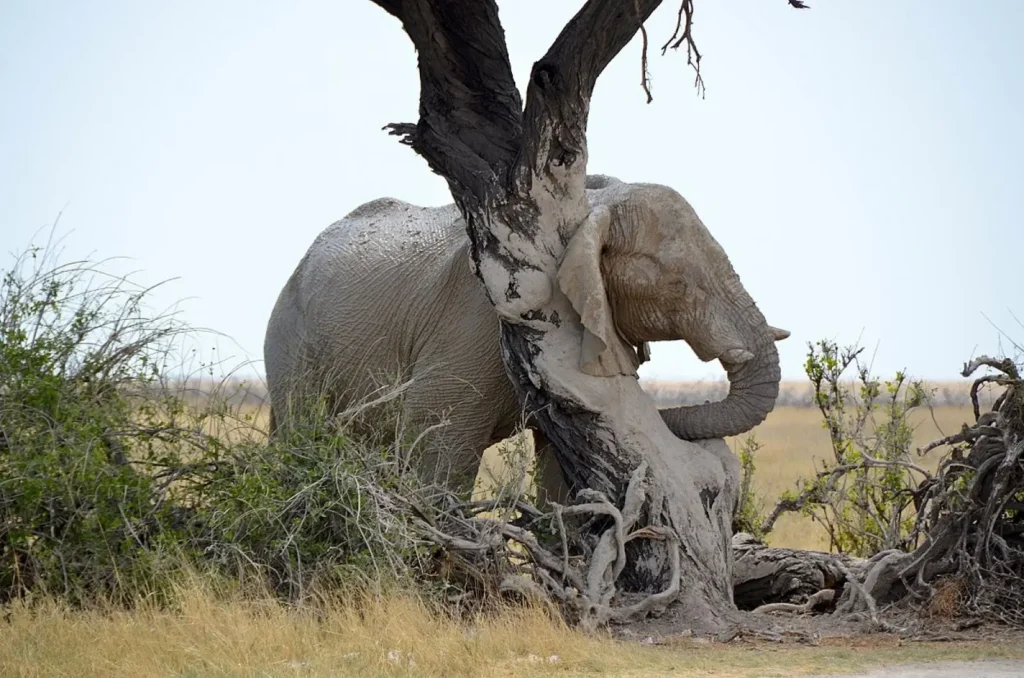
Masteraah – Own work, CC BY-SA 2.0
Elephant Temporin
As for elephant temporal glands (Loxodonta africana), both males and females have them, but glands of males start to get bigger around age 15 until they reach a staggering 2.15kg by age 45-50. Apparently, twigs have a habit of collecting in Loxodonta temporal glands and are thought to have talismanic qualities. Twigs probably get in there because bulls in musth will often rub temporin on a tree to chemically communicate.
Temporin discharge is noted in both males and females of all ages, but is less noticeable in immature elephants. The consistency and constitution of temporin differs between male and females, presumably contributing to the fact that only males go through musth, and only then when they get older.
Elephant temporin is mostly lipids and hormones…but I think it’s not a small part a bit of magic as well.